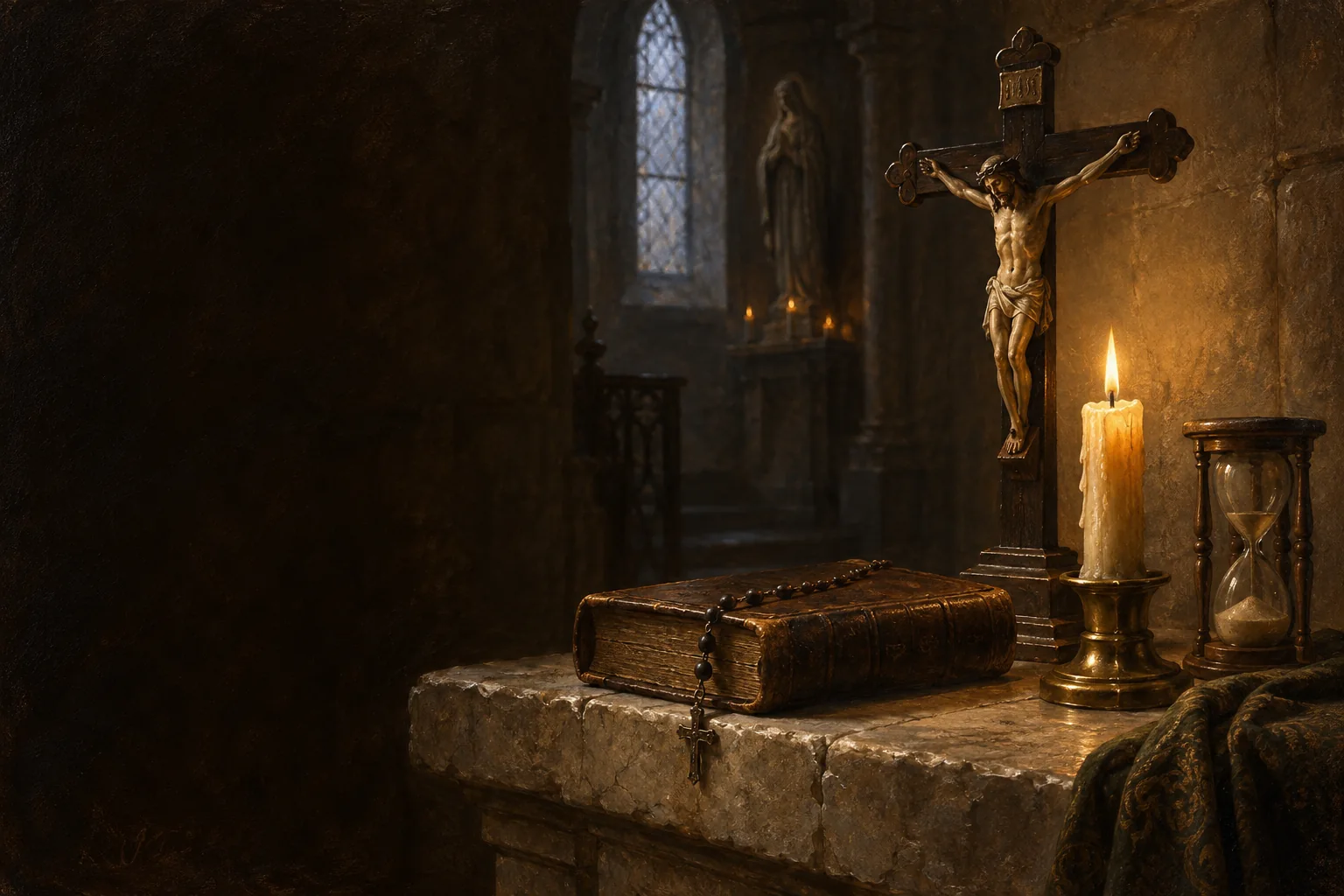
Some will say: What evil am I doing? O God! is it not an evil to lose time in gaming, in useless conversations, which are unprofitable to the soul? Does God give you time, that you may squander it away? No; the Holy Ghost says: “Defraud not thyself of the good day, and let not the part of a good gift overpass thee”—Eccl., xiv. 14. The workmen mentioned by St. Matthew, though they did no evil, but only lost time, were rebuked by the master of the vineyard. “Why stand you here all the day idle?”—Mat., xx. 6. On the day of judgment Jesus Christ will demand an account of every idle word. All time which is not spent for God is lost time.
…
The Venerable Sister Jane of the most holy Trinity, of the order of St. Teresa, used to say that, in the lives of the saints, there is no to-morrow. To-morrow is found in the life of sinners, who always say: Hereafter, hereafter: and in this state they continue till death. “Behold, now is the acceptable time”—II. Cor., vi. 2. “To-day, if you shall hear his voice, harden not your hearts”—Ps., xciv. 8. If God call you to-day to do good, do it; for, to-morrow it may happen that for you time shall be no more, or that God shall call you no more.
If you have hitherto spent the time in offending God, endeavour, like King Ezechias, to weep over your mispent years during the remainder of your life. “I will recount to thee all my years in the bitterness of my soul”—Isa., xxxviii. 15. God spares your life, that you may repair the time you have lost. “Redimentes tempus quoniam dies mali sunt”—Eph., v. 16. In explaining this passage, St. Anselm says: “You shall redeem the time, if you do what you have neglected to do.” Of St. Paul, St. Jerome says that, though the last of the Apostles, he was, on account of his great labours after his vocation, the first in merits. “Paulus novissimus in ordine, primus in meritis, quia plus omnibus laboravit.” Let us reflect that in each moment of time we may acquire new treasures of eternal riches. Were all the land round which you could walk, or all the money which you could count in a day, promised to you, would you not hasten to walk over the ground, or to reckon the money? In each moment you can acquire eternal treasures: will you, notwithstanding, squander away your time? Say not that what you can do to-day, you shall be able to do to-morrow; for this day shall then be lost, and shall never return. When his companions spoke of the world, St. Francis Borgia conversed with God by holy affections: and so recollected was he, that when asked his opinion on the subject of conversation, he knew not what to answer. Being corrected for this, he said: “Malo rudis vocari, quam temporis jacturam pati.” I prefer to be considered stupid and unlearned, than to lose time.